
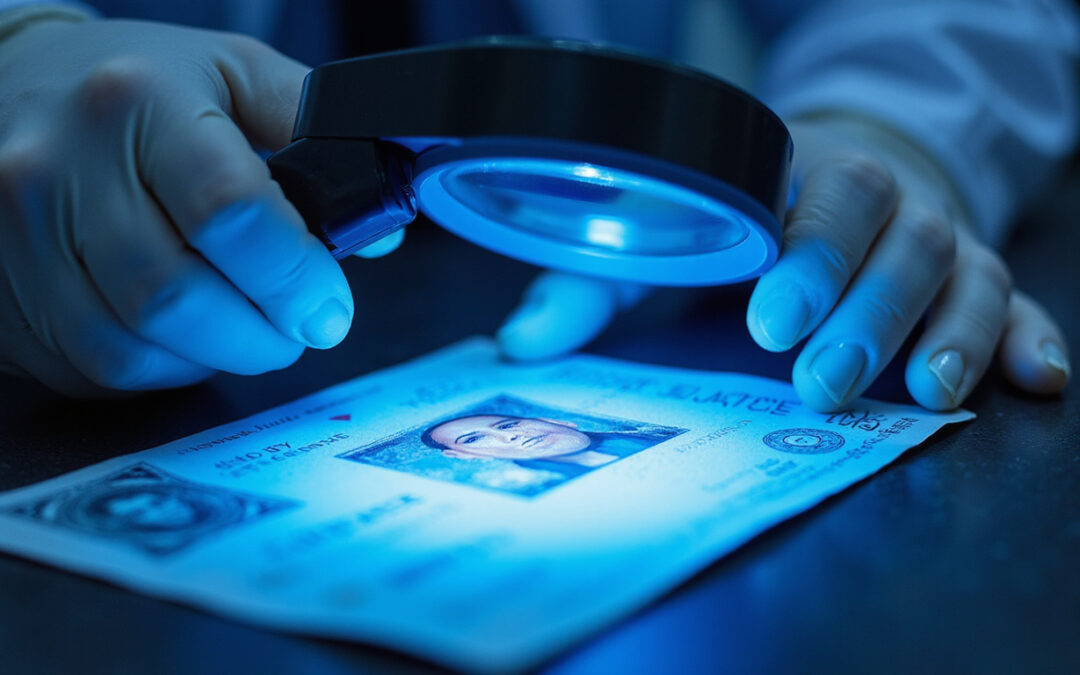
In an era of high-tech printing, laser engraving, and realistic holograms, fake ID detection matters. Bartenders, bouncers, HR staff, law enforcement, and others need to check identity. High-tech fakes seem real at first glance. Careful looks, small tools, simple tech checks, and attention to behavior help you spot fakes.
Why modern fake IDs are harder to spot
- Card-making tools (high-res printers, laminators, UV printers, laser engravers) now produce near-pro results.
- Criminals copy security features like holograms and microprinting using everyday gear.
- Online marketplaces sell templates and blank card stock, which adds variety.
Even the best fakes miss some security layers. Knowing what to check and how to check it keeps you ahead.
Start with a calm, systematic approach
When you check an ID, follow the same routine. A steady routine cuts errors and bias. Use this three-step method:
- Observe (visual and touch checks).
- Verify (barcodes, UV details, microprinting).
- Confirm (ask control questions and note behavior).
Visual inspection: what to look for first
A trained eye spots errors in seconds. Start with these clues:
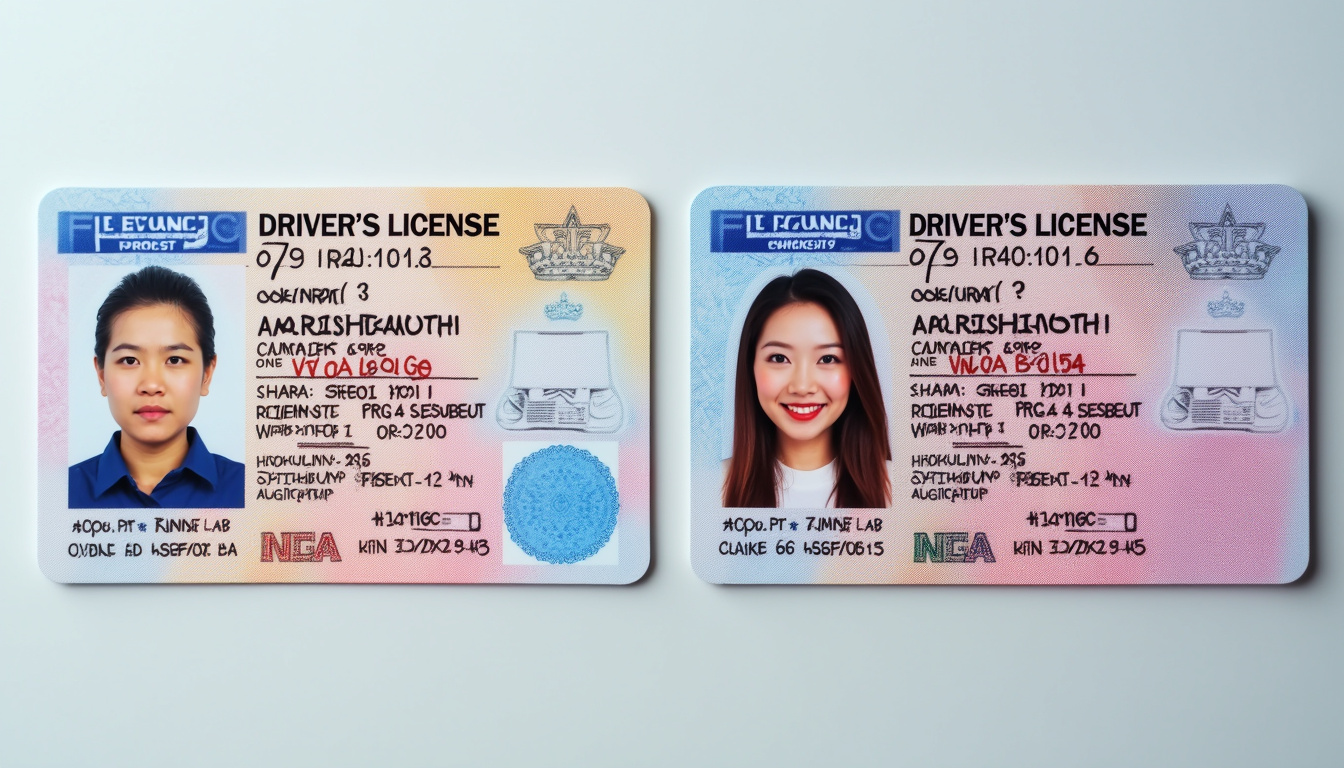
- Overall print quality. Look for pixelation, fuzzy edges, or font mismatches. Genuine IDs show sharp, even text.
- Photo and overlay. The photo must embed into the card. It must align with the surface and not lift at edges.
- Ghost image. Many IDs include a faded copy of the main photo. If you miss it or see a pasted look, be wary.
- Color consistency. Official IDs show smooth gradients and guilloche patterns. Solid color blocks or uneven shading are red flags.
- Holograms and optical devices. Tilt the card. Real holograms shift smoothly and mirror official seals. Cheap foils peel or show wrong images.
- Edge-to-edge printing and lamination. Genuine cards have steady edges and clear lamination. See-through spots, bubbles, or peeling flag a fake.
Tactile features and feel
Many real IDs use touch to show security.
- Raised text and engraving. Run your finger over dates or the card number. Real laser engraving feels slightly set in; fakes feel flat.
- Card thickness and weight. Authentic cards stay firm and uniform. Thin, bendy cards are a red flag.
- Perforations and cutouts. Some IDs use laser perforations for seals. Fakes copy the look but miss the detail.
Technology-assisted checks that pay off
Use low-cost tools to make checks quick and accurate:
- UV light. Many IDs hide UV-reactive inks. A small UV light shows these marks fast.
- Magnifier. A 10x or 20x loupe helps see microprinting and fine lines. Under magnification, fake microtext turns unclear.
- Backlight or lightbox. Hold the card to a light. Real cards with embedded layers act differently than laminated fakes.
- Barcode and 2D scanner apps. Many state IDs use PDF417 or other barcodes. Scan the card to match visible data. Mismatched data hints at fraud.
- Dedicated ID scanners. Businesses that check IDs can use scanners for barcodes, expiration dates, and format tests.
Decode the barcode: a decisive step
Scan the barcode or stripe to check data. Real barcodes follow state rules. A scan that shows a name or DOB mismatch warns you. Many smartphone apps or scanners check PDF417 barcodes. They cut human error and speed up checks.
Behavioral cues and contextual checks
Fake ID checks go beyond the card. Watch the person too.
- Inconsistent answers. Ask for the full name, month of birth, and address. Hesitation or conflicting answers may signal fraud.
- Age-appropriate details. Check if the reported age matches the photo. If a card claims 25 but the face seems younger, investigate more.
- Nervousness vs. normal anxiety. Everyone feels some nerves. Too much or odd nervousness can hide the truth.
- Presentation timing. Notice how the person hands you the ID. Someone who covers details or obstructs your view may hide a fake.
Quick checklist for front-line staff
Use this checklist for speedy ID checks:
- Inspect the photo, overlay, and ghost image.
- Check the hologram shape and its tilt response.
- Scan the barcode (PDF417/magnetic stripe) and compare the data.
- Use UV light to find hidden inks or features.
- Feel for raised text, proper thickness, and clean edges.
- Look for microprinting with a loupe when you can.
- Ask 2–3 control questions and watch for slip-ups.
- If unsure, refuse entry or ask for another ID and document your check.
Legal and ethical considerations
Always follow your local laws and your company policy. Refuse service professionally and without bias. For a suspected fake:
- Do not inspect an ID in ways that hurt privacy or damage the card.
- If you suspect a crime, use your organization’s protocol to alert security or law enforcement.
- Keep records: note time, responses, and evidence (like scanner data). This documentation defends you and aids investigations.
When to call in authorities
- If the ID is clearly altered (glue, mismatched fonts, obvious overlay).
- If the barcode scan shows data that does not match the visual details.
- If you suspect an organized scheme or several fakes.
Many regions treat fake IDs as a crime. For serious fraud, call the local police instead of handling it yourself.
Tools and technologies to consider investing in
Businesses that check IDs often should think about:
- Commercial ID scanning systems with age checks, barcode decoding, and data matching.
- Training for staff on state-specific ID features.
- Regular updates to scanning tools as license designs change.
- Working with local police or regulators for fresh guidance.
Keep up with changing ID designs
States and countries change designs and security features. Relying on memory is risky. Check official resources and industry updates. The American Association of Motor Vehicle Administrators (AAMVA) offers guidance and updates on driver license security.
Practical scenarios with recommended actions
- Scenario: The hologram seems odd, yet the barcode scans right.
Action: Use a magnifier for microprinting and ask control questions. If answers and scan data match, the ID may be real. - Scenario: The photo appears pasted and the barcode gives a different name.
Action: Do not confiscate unless allowed. Deny service, note the incident, and follow your policy to contact authorities. - Scenario: The barcode scans correctly, but the person’s age does not match the reported DOB.
Action: Ask simple questions and request another ID if possible. If doubts remain, refuse entry.
FAQ — quick answers using keyword variations
Q1: How does fake ID detection work in bars and clubs?
A1: Detection in these settings mixes a quick visual check (photo, hologram, microprinting), barcode scans to match data, and behavior checks. Many use ID scanners to lower errors and speed checks.
Q2: What tools help detect fake IDs on the spot?
A2: Common tools include UV lights, magnifiers (loupes), backlights, and barcode or 2D scanning apps. They show hidden inks, microprinting faults, and barcode mismatches.
Q3: Can a smartphone app reliably detect a fake ID?
A3: Smartphone apps that decode barcodes (PDF417) and check formats help but are not perfect. They catch many forgeries by spotting mismatched data, but you must also check the ID visually and behaviorally.
Conclusion: Combine skills, tools, and policies
Good fake ID detection uses skill, tool, and clear rules. High-tech fakes keep changing, but they rarely copy every security layer. Train your team to do steady visual and touch checks. Invest in low-cost tools (UV lights, magnifiers, barcode scanners). Create clear rules for service refusal and reporting. Regular training, careful behavior watching, and using official resources (such as AAMVA) keep your checks both useful and solid.
If you want, I can create a one-page printable cheat sheet tailored to your business (bar/nightclub, retail, HR) that lists the top checks and legal phrases for refusing service.