Building a responsible vendor checklist is not an extra luxury. It now is a core part of managing risk, meeting compliance rules, and protecting your brand. Whether you lead procurement, work in compliance, or run a small business, a structured checklist helps you judge suppliers in a clear way. It also helps you show you did your homework and act fast when problems appear.
Below is a framework of 10 straightforward steps. You can adjust these steps for your organization, no matter its size or industry.
Why you need a responsible vendor checklist
Supply chains today face more challenges and are watched more closely than ever. Rules on data privacy, sanctions, ESG (environmental, social, governance), and modern slavery make you answerable for your own work and your suppliers’ actions.
A clear responsible vendor checklist helps you:
• Find high-risk vendors before you sign a contract
• Use the same checks for teams and regions
• Keep records for audits and stakeholders
• Fix problems early instead of scrambling during a crisis
See the checklist as a living tool. It grows with new rules, business plans, and lessons from past vendor work.
Step 1: Define scope and risk levels for your vendor program
Before you use your checklist, decide which vendors need checking and how deep the review should be.
Not all vendors bring the same risk. For example, a payroll processor handling employee data is more risky than a supplier of office plants. Start by:
• Sorting vendors (e.g., IT, logistics, marketing, professional services, manufacturing)
• Setting risk tiers (e.g., low, medium, high, critical)
• Connecting risk to factors like:
– Data sensitivity and access
– Financial exposure
– Operational importance
– Regulatory impact (e.g., health, safety, finance, healthcare)
– Geographic or political risk
This way, your checklist works in layers. High-risk suppliers get a deep check while low-risk ones get a simpler review.
Step 2: Collect core vendor information and documentation
Begin your checklist with basic details. Verify who you are doing business with and gather key documents.
At least, record:
• Legal name and registration details
• Ownership structure and main shareholders
• Tax ID and certificates of registration
• Physical address(es) and operating sites
• Website and main contacts
• Any regulatory licenses needed (e.g., for finance, health, logistics)
Ask for support documents like:
• Certificate of incorporation or business registration
• Copies of major licenses or certifications
• Company policies (such as the code of conduct, ethics, anti-bribery, privacy)
Keep this data in one place so that procurement, legal, and compliance teams work with the same facts.
Step 3: Screen for sanctions, watchlists, and adverse media
Next, use your checklist to screen vendors with external risk signs. This step is key for regulated industries and cross-border work.
Include in your checklist:
• Sanctions lists (such as UN, OFAC, EU, UK)
• Checks for Politically Exposed Persons (PEP) when needed
• Media reviews for signs of corruption, fraud, environmental harm, or labor abuses
• Records of law enforcement or regulatory actions
For small groups, you may check manually. Many companies use screening tools or compliance platforms for scale and accuracy. Record the screening results, your decisions, and any steps to fix issues.
For further guidance, consult groups like the Financial Action Task Force (FATF) (source).
Step 4: Assess ethical, labor, and human rights standards
Today, responsible sourcing means making sure your vendors respect human rights and labor rules. This check is a key part of a modern vendor checklist.
See if suppliers:
• Ban forced, bonded, or child labor
• Pay fair wages and keep proper work hours
• Create a safe and healthy work setting
• Support freedom of association and collective bargaining
• Prevent harassment, discrimination, or abuse
• Provide a way for workers to report issues
Ask them for:
• A signed note on their Supplier Code of Conduct
• Copies of social responsibility or human rights policies
• Any social audit results or certifications (e.g., SA8000, SMETA audits)
When needed, visit sites or use qualified third-party auditors, especially in sectors like apparel, agriculture, or mining.
Step 5: Evaluate environmental and sustainability practices
Your checklist should also cover environmental performance, especially if the vendor has large physical operations.
Ask:
• Does the vendor follow local environmental laws and permits?
• Do they monitor key impacts (like emissions, water, waste, hazardous materials)?
• Do they have a formal environmental policy or management system (such as ISO 14001)?
• Are they part of sustainability or decarbonization efforts?
Request documents like:
• Environmental policy statements
• ESG or sustainability reports
• Certificates (like ISO standards or industry-specific labels)
For major impacts, also check lifecycle effects, packaging, and logistics emissions. You may ask if they use a similar checklist to screen their own sub-suppliers.

Step 6: Review information security and data protection controls
When a vendor handles your data, especially sensitive personal or confidential data, check their information security and privacy measures.
Your checklist may ask:
• Does the vendor have a formal security program?
• Are they certified (e.g., ISO 27001, SOC 2) or reviewed by an independent party?
• How do they handle access control, encryption, backups, and incident response?
• Do they notify you promptly after a data breach?
• Are they compliant with privacy rules (e.g., GDPR, CCPA) as needed?
Request:
• Security and privacy policies
• Recent test summaries or audit reports
• Data Processing Agreements (DPAs) for personal data
• Plans for business continuity and disaster recovery
Tailor these checks to the data’s sensitivity and risk.
Step 7: Check financial stability and operational resilience
A vendor may meet many criteria yet still be risky if they have financial or operational problems. Include this check in your vendor checklist.
Consider:
• Credit checks or rating reports
• Financial statements for larger or key vendors
• Revenue spread (to spot overreliance on one client)
• Dependence on one facility, region, or key person
• Plans for supply chain redundancy and scaling with demand
Ask vendors:
• What measures support business continuity?
• How did they cope during recent disruptions (like a pandemic or political events)?
• Do they have backup plans for critical supplies?
These checks help you avoid costly disruptions and choose vendors who can grow with you.
Step 8: Embed compliance into contracts and service-level agreements
A checklist works best when its terms are written into contracts. Your expectations should show in your contracts.
Include:
• A clause to follow all relevant laws and regulations
• A commitment to the Supplier Code of Conduct or similar standards
• Anti-bribery and corruption rules
• Data protection and security requirements
• A right for audits and proof of compliance
• Obligations to report incidents, breaches, or major changes
• Rights to end the contract if non-compliance happens repeatedly
Work with legal teams to update contract templates as you refine your checklist.
Step 9: Establish onboarding, training, and communication processes
A one-time check is not enough. Vendors need clear instructions and assistance to meet your rules. Your checklist should cover ongoing communication.
Practical steps include:
• Onboarding packs that explain:
– Your code of conduct
– Compliance rules
– Reporting and escalation methods
• Regular training, especially for high-risk vendors
• A clear contact point on your team for questions
• A simple way for vendors to report issues
Remember, this is a partnership. The goal is to help vendors work responsibly and meet your needs.
Step 10: Monitor vendor performance and conduct periodic reviews
The last step is to keep an eye on vendor performance. Risks change, and your oversight must change too.
Set up a monitoring system that checks:
-
Performance metrics
– On-time delivery, product quality, and service availability
– Adherence to SLAs and key performance indicators (KPIs) -
Compliance and risk signs
– New sanctions or adverse media
– Updated certifications and licenses
– Audit findings and fixes -
Feedback loops
– Input from your teams (project teams, IT, finance)
– Vendor self-assessments at regular intervals
– Site visits or virtual checks for high-risk vendors -
Review schedule
– Annual or biannual checks for high-risk vendors
– Less frequent reviews for lower-risk suppliers
Write down all reviews to show that your checklist is not just paper but used every day.
Sample responsible vendor checklist (10-step summary)
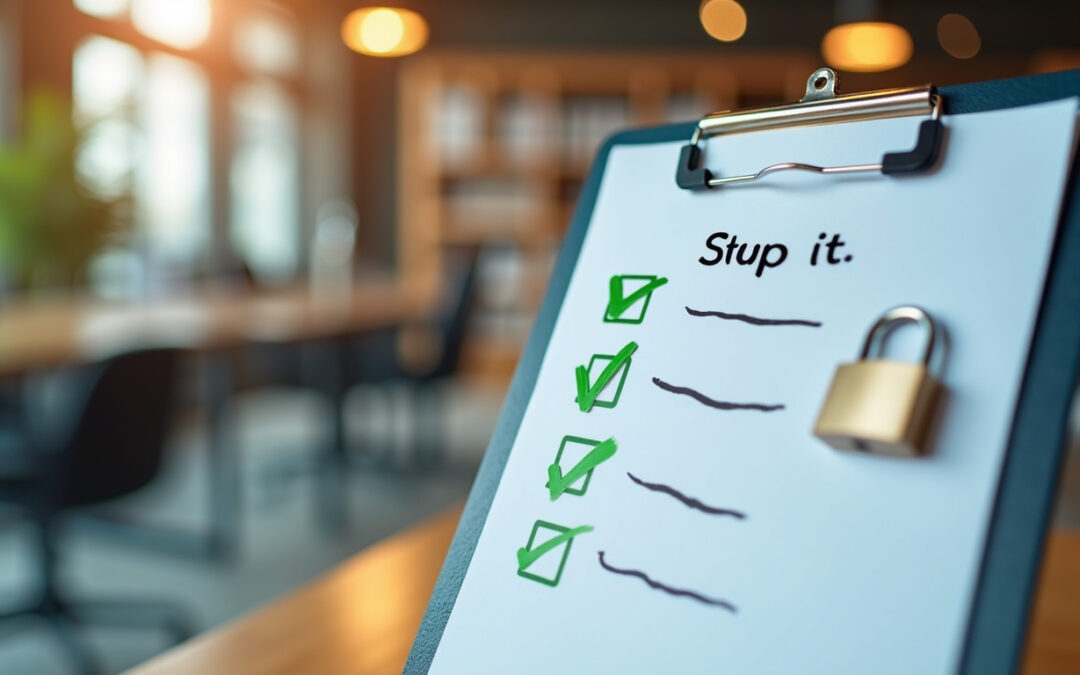
To put this in practice, you can list your responsible vendor checklist as follows:
- Vendor scope & risk classification
- Core company information & registrations
- Sanctions, watchlist & adverse media screening
- Ethical, labor & human rights compliance
- Environmental & sustainability practices
- Information security & data protection controls
- Financial stability & operational resilience
- Contractual compliance & protective clauses
- Onboarding, communication & training
- Ongoing monitoring & periodic reviews
Each step can have its own set of questions, risk signs, and evidence needs that match your industry and region.
Integrating your checklist into tools and workflows
To keep your checklist useful:
• Digitize it: Use a procurement or GRC platform, or even a well-organized spreadsheet if you are a small team.
• Assign ownership: Let procurement handle screening, compliance check sanctions and ethics, and let IT review data security.
• Set approval thresholds: For higher-risk vendors, require that legal, compliance, or senior managers agree before proceeding.
• Track issues: Note exceptions and follow-up actions so you know how risks are managed.
Automatic reminders for renewals, re-screens, and certificate expiries keep your team ahead of problems.
Common pitfalls to avoid
When you build or update a vendor checklist, beware of these traps:
• A one-size-fits-all check that treats a low-risk office supplier like a cloud service provider.
• Too many bureaucratic steps that slow down important purchases.
• Checklist fatigue, where forms get filled for the sake of it with little review.
• Missing escalation steps when red flags appear, leaving teams unsure if they should stop onboarding.
• Static documents that do not update as rules or business models change.
Use your checklist as a guide to make informed decisions, not just as a box-ticking exercise.
FAQs about responsible vendor checklists
1. What should be included in a responsible vendor checklist template?
A good responsible vendor checklist template covers vendor details, checks against sanctions and adverse media, labor and human rights practices, environmental rules, data protection, financial health, and contract terms. It should also list review times, required documents, and steps for handling risk.
2. How often should I review my responsible vendor checklist and update vendor assessments?
Review your responsible vendor checklist at least once a year or when there are major changes in regulations or your business. High-risk vendors should be reassessed annually (or more frequently), and lower-risk vendors every two or three years or when significant changes occur.
3. How can small businesses implement a simple responsible vendor compliance checklist?
Small businesses can start with a responsible vendor compliance checklist that covers the basics: verify legal registration, check sanctions, confirm key policies (ethics, data protection), do simple financial checks, and include clear contract points. Even a one-page form plus a standard contract addendum can improve vendor management.
A clear and simple responsible vendor checklist shifts supplier compliance from a reactive scramble to a proactive, repeatable process. Begin small, tailor the steps to your risks, and update the checklist as your supply chain and rules evolve.