Introduction
A clear alcohol compliance checklist helps bars, restaurants, and retailers cut fines, prevent license suspensions, and avoid shutdowns. It works for a neighborhood pub, a delivery service, or a liquor store. A steady program keeps you legal, protects customers, and builds your reputation.
Why compliance matters now
Regulators at the federal, state, and local levels inspect licensed premises and review complaints. They find common violations such as selling to minors, over-service, poor recordkeeping, or missing licenses. These issues can cause fines, temporary suspensions, or permanent license loss. Noncompliance also raises liability and insurance costs. For federal guidance on licensing and taxes, check the Alcohol and Tobacco Tax and Trade Bureau (https://www.ttb.gov).
Know your licenses and permit requirements
• List every license and permit your establishment needs (retail, on-premise, off-premise, event, delivery).
• Post the licenses as law requires and mark their renewal dates 90 days early.
• Confirm that food trucks, tents, and pop-ups have their own permits or fall under your license in writing.
Age verification: eliminate underage sales
Selling alcohol to minors brings fines. Make age checks required.
• Check IDs in several steps: spot tampering, verify birthdate, match photo, and note expiration.
• Use ID scanning technology to cut human error and keep a digital record.
• Train staff to check IDs for anyone who looks under the state’s age limit (usually 30–40 years) and to stop sales if uncertain.
Staff training and written policies
Regular training is key to compliance.
• All front-of-house staff and managers must complete certified server training (like TIPS or state-approved courses).
• Hold refresher courses yearly or when laws and policies change.
• Write down policies for refusing service, limiting drinks, reporting incidents, and handling intoxicated guests or fights.
• Post a brief summary of key rules and penalties in a staff area.
Operational controls that reduce risk
• Set and enforce house rules: last-call times, drink limits, and rules for large parties.
• Use portion control and standard recipes to stop over-pouring.
• Watch off-hours access and secure alcohol storage to prevent theft or unauthorized sales.
Recordkeeping and inventory management
Good recordkeeping protects your business and meets regulations.
• Organize and back up sales records, invoices, and tax filings as local law requires.
• Do weekly or monthly inventory counts and match them with sales.
• Keep delivery logs and ID check proof for third-party deliveries.
• Save records of staff training, license renewals, and incident reports.
Security, incident management, and customer safety
• Use incident report forms to note refusals, underage attempts, fights, or emergencies. Signed reports add weight in reviews.
• Install and maintain security cameras near entrances, the bar, and exits as the law allows.
• Work with local police and emergency services; put up emergency contact numbers for staff.
Compliance audits and working with regulators
• Do internal compliance audits every quarter using your checklist. Have managers rotate roles to catch blind spots.
• When inspectors come, stay calm. Offer cooperation, ask for credentials, and provide documents quickly.
• If you get a citation, act fast. Regulators appreciate quick steps to fix issues.
Insurance and legal safeguards
• Get liquor liability insurance that matches your risk. Keep proof of coverage on site.
• Work with legal counsel who knows alcohol licensing for help with appeals, enforcement, or hearings.
• Add indemnity clauses in contracts with third-party vendors (like caterers or delivery apps) to assign responsibility if they break alcohol rules.
Sample alcohol compliance checklist (numbered)
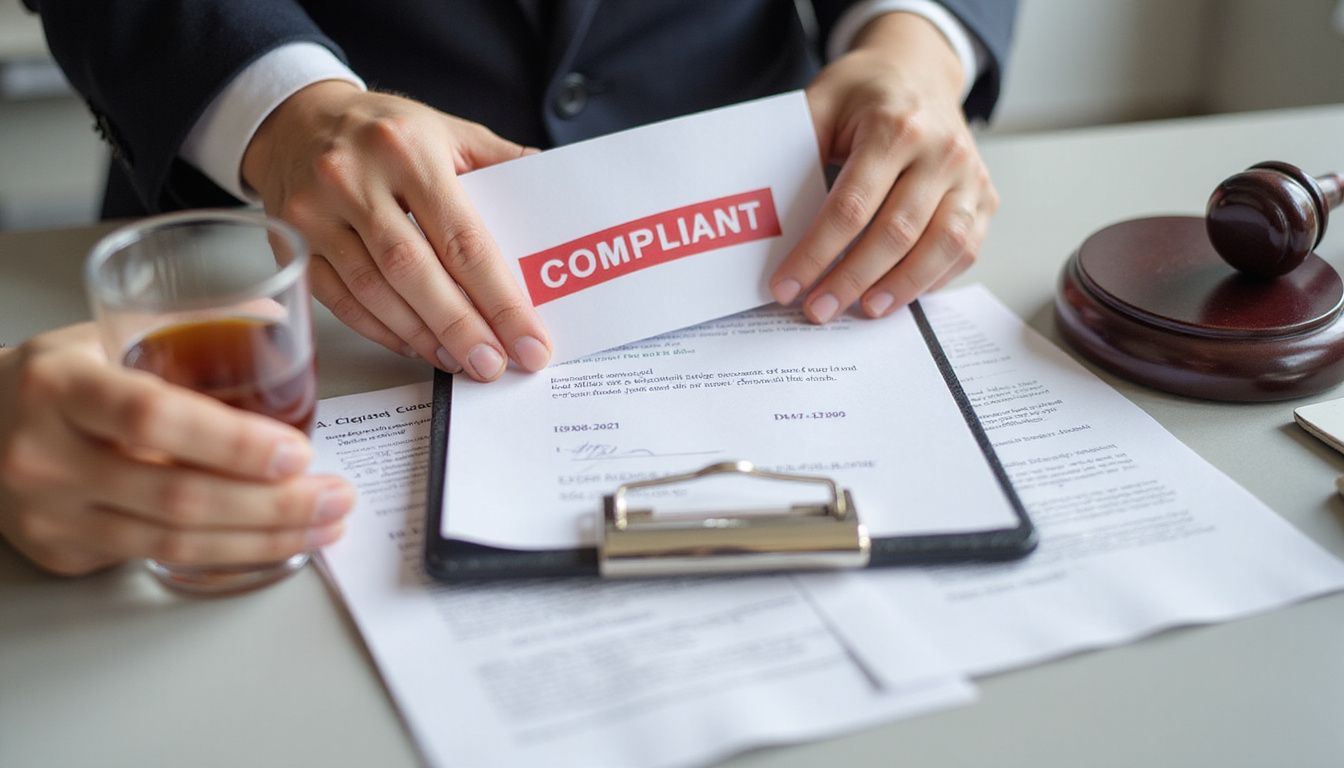
Use this template and adjust it to fit your local laws.
- Verify that all alcohol licenses are current and posted.
- Confirm renewal deadlines and schedule renewals 90 days ahead.
- Ensure all staff complete state-approved server training and file their certificates.
- Enforce an ID-checking policy (use an ID scanner if you can).
- Keep written policies for refusing service and use incident report forms.
- Do weekly inventory counts and match them to sales data.
- Store sales records, invoices, and tax documents as required by law.
- Use tools for portion control and manage bartender pours.
- Train staff to spot intoxication and follow safe transport rules.
- Require managers to log quarterly internal audits.
- Secure off-hours storage and limit access to alcohol stock.
- Display legally required signs (no minors, drink responsibly, license info).
- Keep proof of liquor liability insurance on-site.
- Update an emergency contact list and police liaison details.
- Review contracts with delivery or third-party platforms for compliance.
- Record any corrective actions after a violation.
- Check and maintain point-of-sale ID scanning tools.
- Store camera footage as local laws require.
- Prepare a plan for license inspections and name a point person.
- Schedule an annual legal and operational review with counsel.
Implementing the checklist: practical tips
• Assign roles: choose a Compliance Manager for audits, a Training Lead for staff education, and a Records Lead to handle documentation.
• Use technology: POS systems, inventory apps, and ID scanners lower errors and create audit trails.
• Keep a visible “compliance binder” with licenses, training records, incident logs, and insurance certificates so inspectors find documents fast.
• Make compliance part of performance reviews and offer small monthly incentives when staff follow policies well.
Common violations and how to avoid fines or shutdowns
• Selling to minors: Avoid this with strict ID checks and staff accountability. Use ID scanners and document refusals.
• Over-service: Manage portions, limit rounds of shots, and empower staff to refuse service without fear.
• Improper recordkeeping: Use a central digital system and back up physical documents to have records ready during audits.
• Operating outside permitted hours or locations: Check local rules and event permit requirements before changing hours or hosting events.
Responding to a violation or inspection
• Record the inspection or event immediately: note the date, time, inspector name, badge number, and any notices.
• Cooperate, yet do not volunteer extra information. Ask for written details when possible.
• Fix minor issues quickly and document your actions. Quick fixes can lower penalties.
• For any administrative citation or hearing notice, consult legal counsel and gather your training records, policies, and corrective action proofs.
Measuring success: KPIs for compliance
Watch these numbers to be sure your compliance program works:
• Monthly refusal-of-service incidents and their outcomes.
• Inventory shrinkage compared to sales.
• Number of trained staff and training dates.
• Frequency of inspections and any citations.
• License renewal times and any late renewals (aim for none).
FAQ — short Q&A using keyword variations
Q1: What should a bar’s alcohol compliance checklist include?
A1: It should include the current licensing status, staff training certificates, ID-checking and refusal policies, portion control measures, incident reports, security cameras, and records of internal audits. Also add rules for last call, drink limits, and management escalation.
Q2: Is there a free alcohol compliance checklist for retail stores?
A2: Many state alcohol control agencies and trade associations offer free templates. Adapt a general checklist to cover age checks, secure product placement, inventory reconciliation, and proper license display.
Q3: How often should I update my restaurant’s alcohol compliance checklist?
A3: Update your checklist whenever local laws change, after inspections or citations, annually, or after major operational changes such as new delivery partnerships, renovations, or menu changes.
Final thoughts
An alcohol compliance checklist is not a one-time form. It is a living program that combines training, strong controls, clear records, and good regulator relationships. By making compliance routine, documenting each step, and using technology to lower mistakes, you cut the risk of fines and closures while protecting customers and your business. For federal licensing and tax details, visit the Alcohol and Tobacco Tax and Trade Bureau (https://www.ttb.gov).